

Table of Contents
- What Is a Dedicated Development Team?
- Who Is on a Dedicated Software Development Team
- How a Dedicated Team Works Day to Day
- Dedicated Team vs Staff Augmentation, Freelancers and In-House
- How to Keep a Dedicated Team Aligned With Your Product
- When a Dedicated Development Team Makes Sense, and When It Does Not
- What Drives the Cost of Dedicated Developers
- How to Hire Dedicated Developers in Five Steps
- Frequently Asked Questions
- Key Takeaways
| A dedicated development team is a complete, long-term team that a partner assembles for you and that works only on your product. You set the direction and priorities, and the partner handles hiring, team operations and continuity. This guide explains who sits on the team, how it runs week to week, how it compares with staff augmentation, freelancers and in-house hiring, and the signals that tell you it is the right model, or the wrong one. |
What Is a Dedicated Development Team?
A dedicated development team A dedicated development team is a group of engineers, testers and a delivery lead assembled for one client's product for months or years. A core team works full time on that product, and specialists such as DevOps or design join part time as the roadmap needs them. Unlike a project vendor, the team does not hand over a finished scope and leave. Unlike individual augmented engineers, it arrives as a unit with its own delivery management.
The model sits between building a team in-house and outsourcing a project. You keep product ownership and the backlog. The partner keeps the team staffed, running and accountable for delivery against the milestones you agree on.
A typical example: a SaaS company wants to launch a new analytics module without slowing its core platform. Instead of hiring six people over two quarters, it adds a dedicated team that owns the module from first sprint to release, while its in-house engineers stay focused on the platform. The product owner sets priorities for both, and the two teams share standards and code review rules.
Who Is on a Dedicated Software Development Team
A dedicated software development team is built around the product, not a fixed template. Most teams start with a core and add specialists as the roadmap demands. This table shows typical roles and what each one owns.
| Role | What the role owns | When you need it |
|---|---|---|
| Tech lead | Architecture, code standards, technical decisions | From day one |
| Senior engineers | Feature delivery across the stack | From day one |
| QA engineer | Test strategy, automation, release checks | Once releases are regular |
| Project manager | Sprints, reporting, milestones, team operations | From day one |
| DevOps engineer | CI/CD, environments, cloud infrastructure | Part time, scaling with releases |
| Product designer | User flows and interface design | When UX work is on the roadmap |
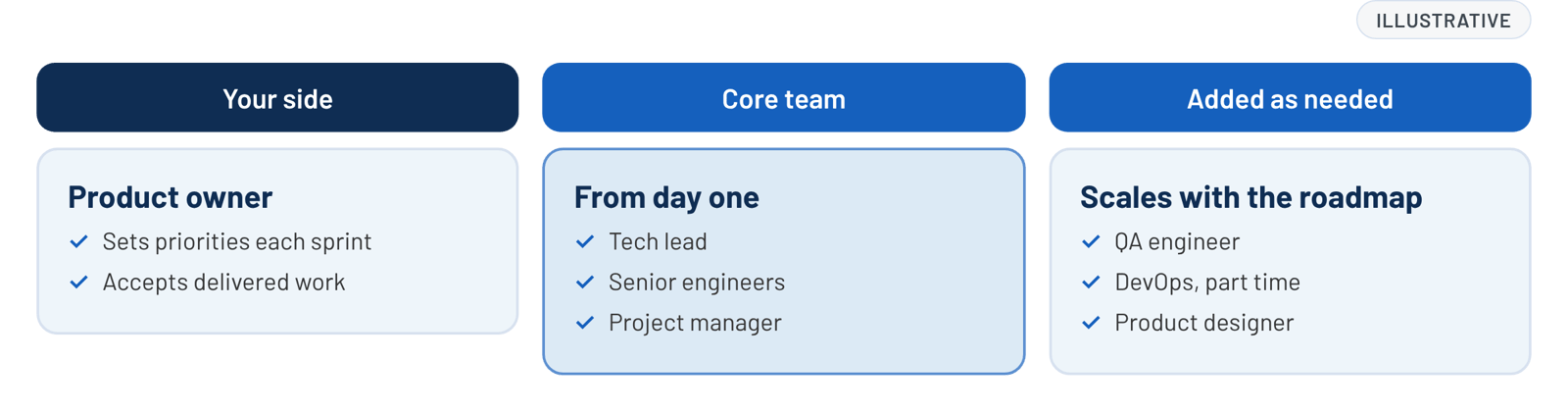
Figure 1. Illustrative composition of a dedicated development team.
Start smaller than you think. A tech lead, two or three senior engineers and a project manager can ship a product increment every sprint. The Mythical Man-Month still holds: adding people to a team that is behind slows it further, so grow the team when the work is ahead of schedule, not when it is late.
How a Dedicated Team Works Day to Day
A dedicated team runs on your product priorities and the partner’s delivery structure. At Bluelight, a dedicated team includes a project manager who handles day-to-day operations, reporting and milestones, so your product owner spends time on decisions, not coordination.
- The team works in two-week sprints with a sprint review every two weeks, where you see working software, not status slides.
- Engineers collaborate in real time in Slack and log time in Toggl, so you see where effort goes each week.
- The team uses your tools and processes, from your repositories to your ticketing system.
- Engineers work US business hours, which keeps planning, reviews and decisions inside the same day.
That same-day loop is where nearshore teams earn their keep. Bluelight’s nearshore benchmark uses standard working-hour assumptions to illustrate the gap. In its single change-request scenario, a question that waits overnight for an offshore team gets answered the same day nearshore, so the estimated turnaround is 84% faster. In its full-project scenario, the same effect adds up to an estimated 28 calendar days saved. Bluelight teams are staffed from Latin America, where engineers share your working day.
Track the team with outcomes, not hours. DORA’s four key metrics give you a shared scorecard: change lead time, deployment frequency, change failure rate and failed deployment recovery time.
Dedicated Team vs Staff Augmentation, Freelancers and In-House
A dedicated team is one of four ways to add engineering capacity. The table compares them on the factors that decide long-term product work.
| Factor | Dedicated team | Staff augmentation | Freelancers | In-house |
|---|---|---|---|---|
| What you add | A full team | Individual engineers | Individual contractors | Employees |
| Who runs delivery | Partner PM, your priorities | Your leads | You | You |
| Speed to start | Weeks | 7 to 14 business days | Days, per person | Full recruiting cycle |
| Continuity | High, partner keeps it staffed | High within your team | Low | High |
| Management load | Low | Medium | High | High |
| Best for | A product or stream you want delivered end to end | Filling skill gaps in an existing team | Short, defined tasks | Permanent core roles |
If your team already has strong engineering leads and needs more hands, nearshore staff augmentation is usually the better fit. If you need a whole stream of work delivered with its own management, a dedicated team fits. Our guide to IT team engagement models covers contracts and governance for each.
How to Keep a Dedicated Team Aligned With Your Product
A dedicated team drifts when context stops flowing from your side. These practices keep it close to the product without turning you into its manager.
- Hold a weekly product sync between your product owner and the team’s tech lead. Keep it to decisions, not status.
- Write a shared definition of done that covers tests, documentation and review before any ticket closes.
- Record architecture decisions in short decision records, so new engineers learn why the system looks the way it does.
- Attend every sprint review. Working software is the fastest feedback loop you have.
- Review the roadmap with the team each quarter, so engineers understand the outcomes behind the tickets.
- Give the team access to customer feedback and analytics. Engineers make better tradeoffs when they see how users behave.
Teams that follow these habits behave like an extension of your company rather than a supplier. That is the point of the model: a team that owns delivery and still thinks like your own.
When a Dedicated Development Team Makes Sense, and When It Does Not
Use these signals to test the fit before you start a conversation with any partner.
- Choose a dedicated team when you have a product or product line with a backlog that runs a year or more.
- Choose it when your engineering leaders are at capacity and cannot manage more individual contributors.
- Choose it when you need to start a new product without pulling engineers off the current one.
- Avoid it for a fixed, short project with a clear end date. Scope it as a project instead.
- Avoid it when you cannot assign a product owner. The team needs someone on your side who decides priorities every sprint.
- Avoid it when you only need one or two specialists. Add them to your existing team instead.
What Drives the Cost of Dedicated Developers
The cost of dedicated developers depends on decisions you make when you shape the team. Four drive most of it:
- Team size and mix. Senior-heavy teams cost more per person and need less oversight. Balance the mix against how much ambiguity the roadmap holds.
- Specialist roles. Part-time DevOps, QA or design roles add cost only when the roadmap needs them, so time them to the work.
- Engagement length. Longer engagements spread onboarding effort over more delivered work.
- Location and overlap. Shared working hours reduce idle time spent waiting on answers.
For current market data by region, see our nearshore software development rates guide.
How to Hire Dedicated Developers in Five Steps
- Define the product scope and outcomes. Describe what the team will own and how you will measure success in the first quarter.
- Name your product owner. One person on your side sets priorities and accepts work every sprint.
- Shape the starting team. Agree on the core roles and the triggers for adding specialists later.
- Review and approve the engineers. Watch technical assessments and interview the tech lead before the team starts.
- Run the first sprints as a trial. Set goals for the first two sprints and review them together before you scale the team.
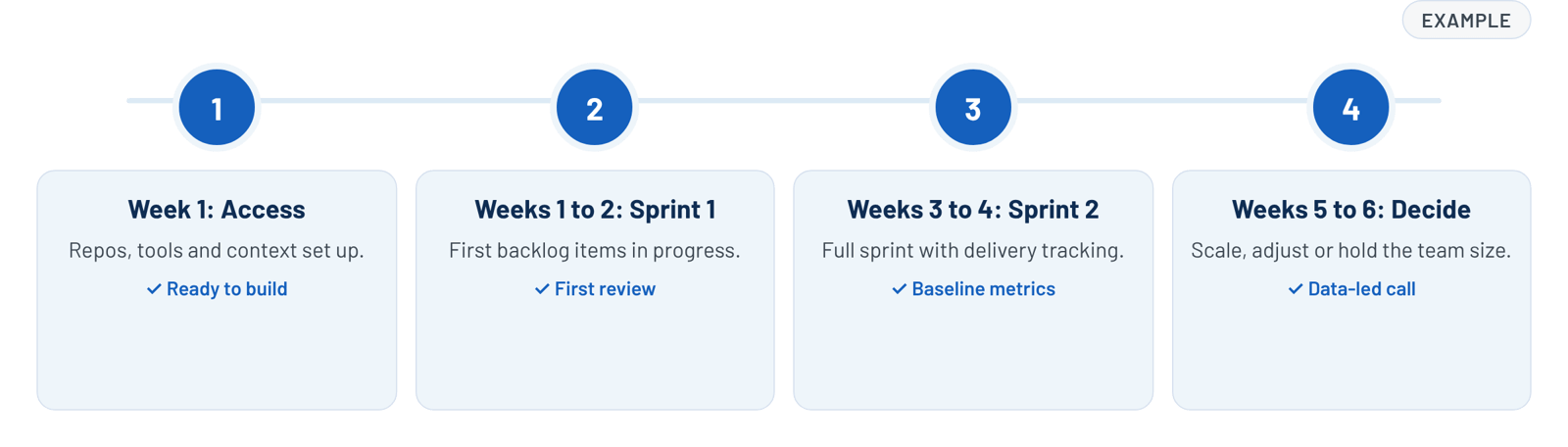
Figure 2. Example of a dedicated team’s first six weeks.
Bluelight builds development teams around your roadmap, with a project manager who runs delivery and a 2-week risk-free trial to prove the fit. Book a Consultation →
Frequently Asked Questions
What is a dedicated development team?
A dedicated development team is a long-term team of engineers, testers and a delivery lead that a partner assembles to work only on your product. You own the product and the backlog. The partner hires the team, keeps it staffed and runs day-to-day delivery against the milestones you agree on.
How is a dedicated team different from staff augmentation?
Staff augmentation adds individual engineers to your existing team, and your leads manage them. A dedicated team arrives as a complete unit with its own project manager, so it can own a product or workstream with less management from you. Choose augmentation to fill skill gaps and a dedicated team to deliver a whole stream.
How long does it take to set up a dedicated development team?
Setup usually takes a few weeks, depending on team size and roles. Individual engineers can start faster: Bluelight onboards engineers in 7 to 14 business days. Plan for one sprint of onboarding, then measure delivery from the second sprint onward before you decide to scale the team.
Who manages a dedicated software development team?
You manage the product: priorities, the backlog and acceptance of work. The partner manages delivery operations. At Bluelight, every dedicated team includes a project manager who handles daily coordination, reporting and milestones, and every engagement has a dedicated account manager as well.
When should I not use a dedicated team?
Skip a dedicated team for short, fixed projects with a clear end date, when you need only one or two specialists, or when no one on your side can act as product owner. In those cases, a scoped project or staff augmentation fits better and costs less management effort.
How do I measure a dedicated team’s performance?
Measure outcomes, not hours. Track DORA’s four key metrics, change lead time, deployment frequency, change failure rate and recovery time, alongside sprint goals met and the quality of each sprint review demo. Compare trends over several sprints rather than judging any single one.
Key Takeaways
- A dedicated development team owns a product or workstream end to end, with its own delivery management.
- You keep product ownership; the partner keeps the team staffed, running and accountable.
- Start with a tech lead, a few senior engineers and a project manager, and add specialists when the roadmap needs them.
- Choose staff augmentation instead when you only need to fill skill gaps in a team you already lead.
- Judge the team on delivery metrics and sprint reviews, not hours logged.
More cost-effective than hiring in-house, with Nearshore Boost, our nearshore software development service, you can ensure your business stays competitive with an expanded team and a bigger global presence, you can be flexible as you respond to your customers’ needs.
Learn more about our services by booking a free consultation with us today!


